It felt very springlike at today's St. Patrick's Day Parade in downtown Chicago.
 |
| Photo: Marge Ishmael |
 |
| Photo: Marge Ishmael |
|
And, yes, they do dye the Chicago River green, with an eco friendly vegetable dye (I'm told):
 |
| Photo: Dani Fasone |
A warm day at 63rd Street Beach (around 55 degrees Fahrenheit) and the geese are enjoying it as much as the humans!
 |
| Photo: Marge Ishmael |
And there were some white-winged scoters:
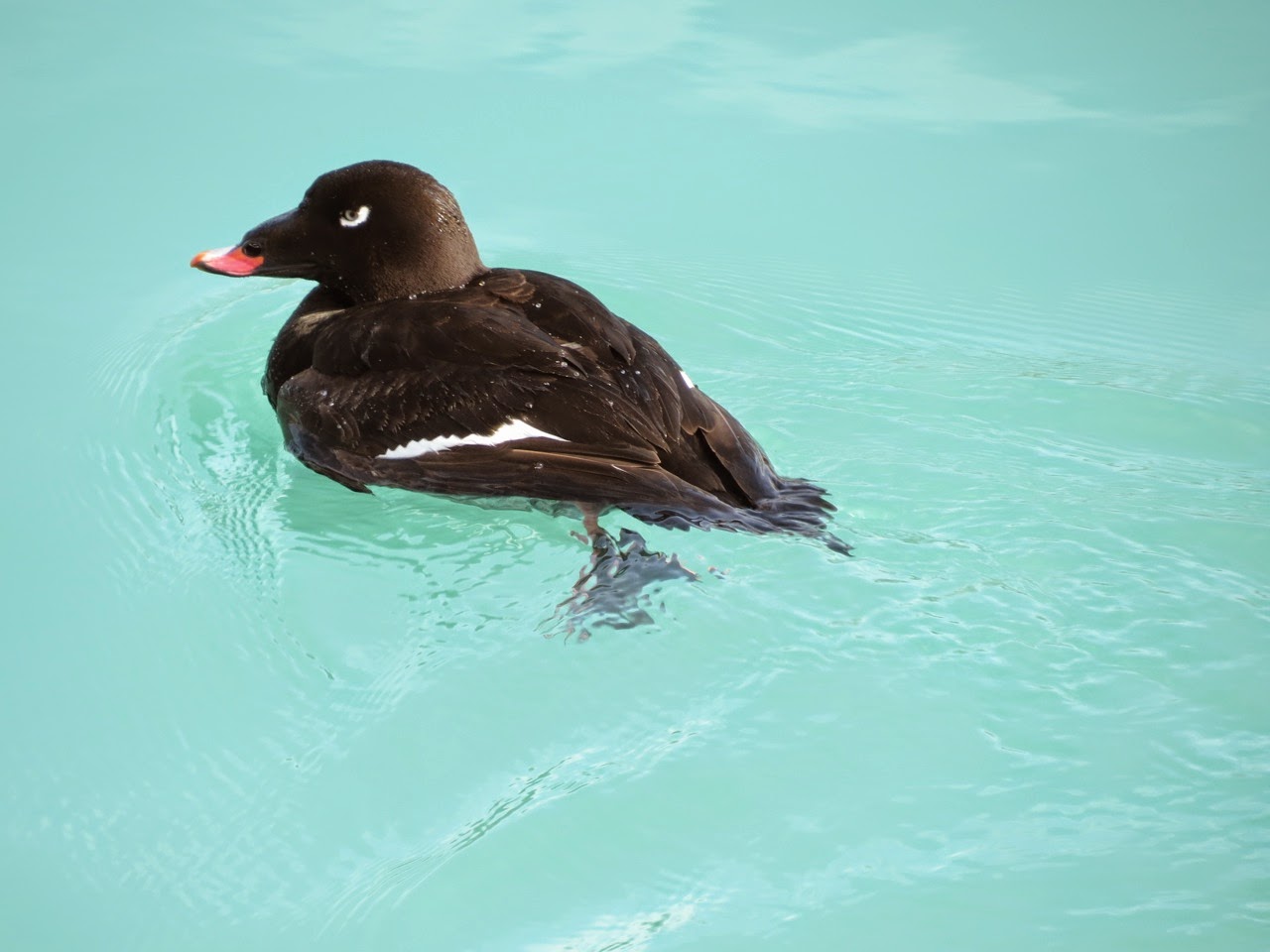 |
| Photo: Jane Masterson |
Today's warmer weather brought out an opossum that was hibernating in our wood pile. You can just about see his tiny fangs in the second photo. http://en.wikipedia.org/wiki/Opossum
 |
| Photo: Marge Ishmael |
 |
| Photo: Mark Oreglia |
It's a cold and snowy Sunday so I decided to spend it at The University of Chicago's Oriental Institute: http://oi.uchicago.edu/
The colossal bull's head (below) is from the ancient
Persian capital of Persepolis - present day Iran. Carved from dark grey limestone and highly polished, the head
measures over two metres high and a metre and a half wide and weighs an
estimated ten tons. The head was
attached to the body of a bull that still stands as one of a pair
flanking the northern portico of the so-called Hundred-Columns Palace
(also called the Throne Hall).
Entrances to important buildings were frequently ‘protected’ by pairs
of colossal animals (some of which were mythological guardian
creatures) in the ancient Near East. Sometime in the past, perhaps when the city was ransacked, both heads
became detached from their bodies. They were found not far from the
bodies during excavations in 1932/3 by archaeologists from the
University of Chicago’s Oriental Institute. Unfortunately, the ears and
horns, which were not carved from the same block of stone but
added separately, were not recovered.
 |
| Photo: Marge Ishmael |
This is an old photo of the bull's head being restored once it got to Chicago:
And below is a human-headed winged bull from what is now Iraq. It reminded me that similar artifacts have been destroyed by ISIS militants in northern Iraq this week: http://news.nationalgeographic.com/news/2015/02/150227-islamic-militants-destroy-statues-mosul-iraq-video-archaeology/
"This colossal sculpture was one of a pair that guarded the entrance to
the throne room of King Sargon II. A protective spirit known as a
"lamassu", it is shown as a composite being with the head of a human,
the body and ears of a bull, and the wings of a bird. Viewed from the
side, the creature appears to be walking; but when viewed from the
front, it appears to be standing still. Thus it is actually represented
with five, rather than four, legs."
 |
| Photo: Marge Ishmael |


